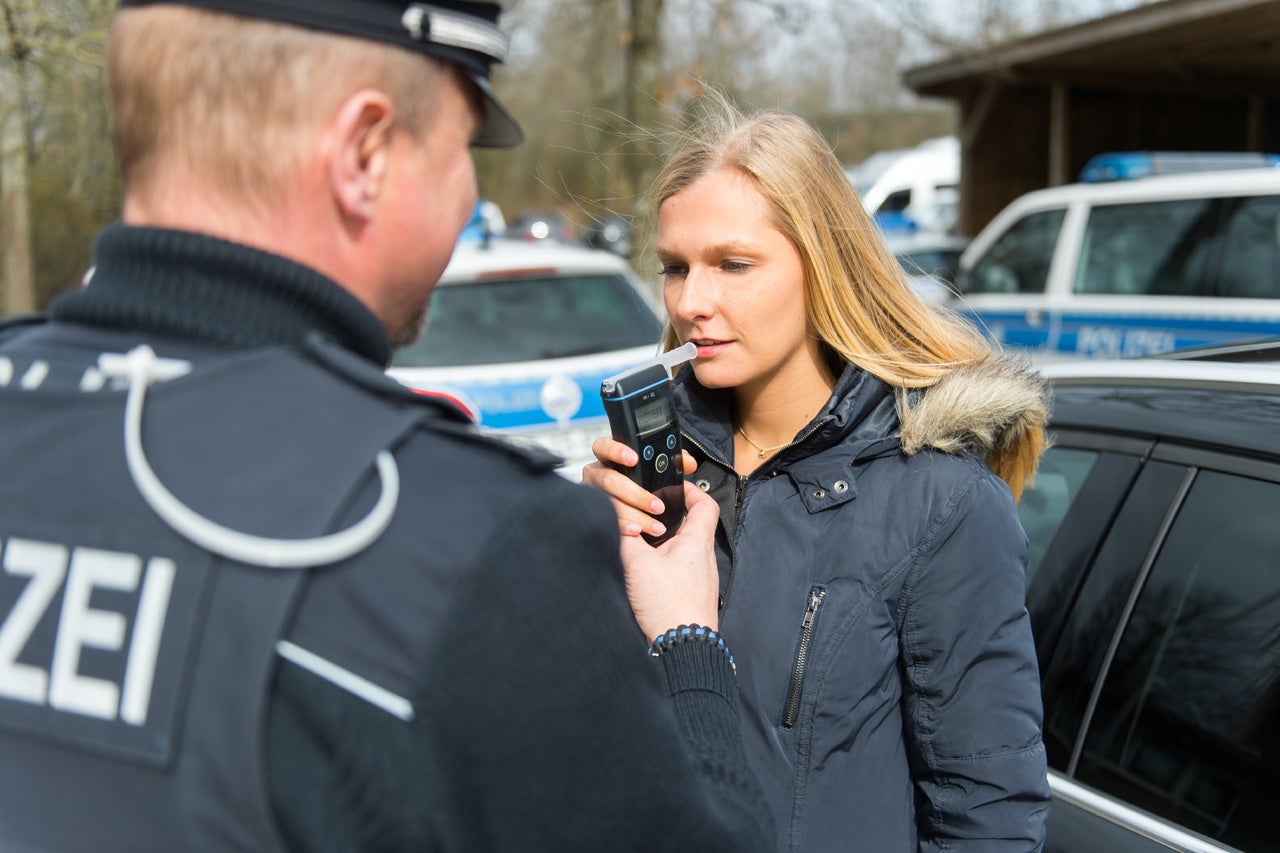

If a police officer pulls you over on suspicion of drunk driving, they may ask you to exit your car and perform a field sobriety test. These tests are used to assess a driver’s balance and eye movements and are the most common methods police officers use to determine whether a driver may be under the influence of drugs or alcohol.Driving under the influence (DUI) charges are a serious matter in Maryland, and state prosecutors aggressively pursue these cases. If a court convicts you of the charge, you may face severe penalties, including hefty fines, jail time, or license suspension. Take steps toward protecting your future today by calling The Law Office of Hillel Traub.
3 Standardized Field Sobriety Tests in Maryland
There are three Standardized Field Sobriety Tests that the National Highway Traffic Safety Administration (NHTSA) developed in the 1970s, and they might be admissible as evidence in court. Remember, these field tests are voluntary in Maryland, and there is no legal requirement to participate. People may decline to take the test for various reasons, such as an injury, inability to balance on one foot sober, or a health condition that affects their balance.Maryland police officers follow the three field sobriety tests the NHTSA developed: the horizontal gaze nystagmus, the walk and turn, and the one-leg stand.
Horizontal Gaze Nystagmus
Nystagmus is an involuntary eye movement when you change the direction of your gaze at a specific angle. Nystagmus can also be present as a result of various medical conditions. Alcohol exaggerates nystagmus, causing a jerk-like movement when moving the eye. During this test, officers move a pen from side to side about 12-15 inches from your face. They will observe your eyes to see if you can follow the pen smoothly, if the eye jerking motion becomes more visible, or if the jerking begins within 45 degrees from your eye’s center.When defending the test results in court, a DUI attorney will investigate medical conditions or injuries the suspect may have had. Additionally, the test may have occurred on a busy road at night with cars coming toward the driver, causing the driver to be distracted.
Walk-and-Turn Test
Officers will instruct the driver to walk a specified number of steps, then stop, pivot, and take the same steps back. Drivers must count the steps out loud while walking in a straight line. Law enforcement officers investigating a DUI will take any slight misstep, such as stumbling, stopping to regain balance, or turning incorrectly, as a sign of impairment. If you display two or more signs, an officer may arrest you for drunk driving.The walk-and-turn test is highly subjective. A medical condition or medication could cause someone to lose their balance even while fully sober. Uneven pavement and the stress of police pulling them over could also be factors in a poor result.
One-Leg Stand Test
Drivers stand on one foot with the other about six inches off the ground and count aloud from 1,000. The officer will time them for up to 30 seconds. During the test, police will look for signs of impairment, such as swaying while balancing, using arms to balance, or hopping to maintain balance.Similar to the other Standardized Field Sobriety Tests, a defense attorney can challenge the one-leg test in court. Performing the test on anything but a solid, level, and dry surface could make it difficult for even a sober person to balance. Additionally, many medical conditions impair a person’s balance, but not their ability to drive.
Bring Your Case to a Maryland DUI Defense Attorney Today
The NHTSA designed these three field sobriety tests to be difficult, and sober people may even fail them. If you have already taken a test and police charged you with a DUI, it is vital to contact a Maryland DUI defense attorney. Attorney Hillel Traub will launch a thorough investigation into the tests to ensure the police conducted them properly and defend you against these charges in court. Call (410) 580-1100 or complete our contact form to schedule a free consultation today.